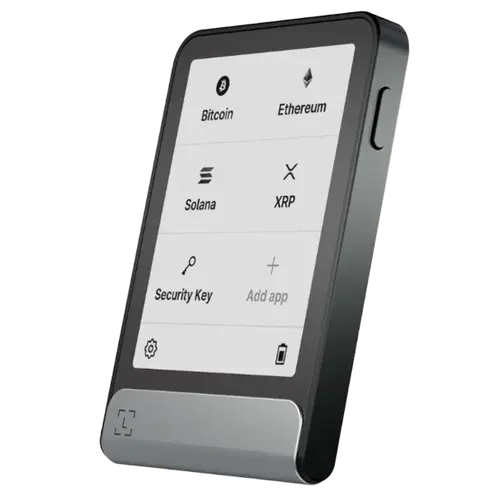
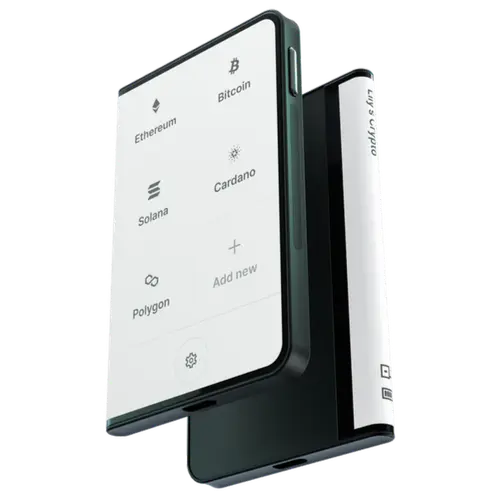
Ledger's luxury lineup for those who want premium hardware. The Stax ($399) and Flex ($249) both have large E-ink touchscreens and the same closed-source secure element. The Stax adds wireless charging and a curved design. Both share the same fundamental security model, and the same concerns I have about Ledger's closed-source approach and track record.
Buying advice
Don't buy either. The Jade Plus at $149 offers open-source firmware, air-gapped operation, and bitcoin-only focus. That's $100 less than the Flex with better security.
Ledger Flex: security incidents you should know
January 2026: Global-e customer data exposure
Global-e, the company that runs checkout on Ledger.com, disclosed in January 2026 that attackers had accessed order records. Names, contact details, and order details for Ledger customers were exposed. Ledger says seed phrases and funds were not affected, but every leak like this feeds more phishing and puts buyers' home addresses in criminal hands again.
October 2026: Implanted devices sold through a reseller
Attackers opened genuine Ledger devices, added a hidden implant that captured the 24-word seed phrase during setup and sent it out over a cellular connection, then put the devices back on sale through a reseller in Southeast Asia. Ledger confirmed a hardware implant attack and blames the distribution channel, saying it found no flaw in its chip, operating system, or servers. Ledger named the reseller, CryptoBilis, and asked it to stop selling. The cellular exfiltration detail comes from outside researchers, not from Ledger. On-chain researchers estimated losses of up to $93.2 million across more than 300 wallets, a figure Ledger says it has not verified.
These aren't hypothetical risks. They happened. When a company has multiple critical security incidents, you have to ask: why would you trust them with your bitcoin?
The bottom line
If you're committed to Ledger despite the red flags, the Flex saves you $150 with 90% of the features. The Stax's wireless charging isn't worth $150. But I don't recommend either. Closed-source secure elements, the data breach history, and the Recover controversy make the entire Ledger ecosystem suspect.
Security architecture
Security is the whole point. Everything else is secondary. Here's how these two handle it:
- Ledger Flex: Closed-source secure element with e-ink touchscreen.
- Ledger Stax: Closed-source secure element with e-ink display.
Both wallets keep their firmware closed. That means you're trusting the company, not the code. For serious bitcoin storage, I'd rather see open-source firmware.
Feature comparison
The specs that matter for bitcoin security.
| Feature | Ledger Flex | Ledger Stax |
|---|---|---|
| Price | $249 | $399 |
| Bitcoin-Only | No | No |
| Open-Source | No | No |
| Air-Gapped | No | No |
| Secure element | ST33K1M5 (CC EAL6+, closed-source) | ST33K1M5 (CC EAL6+, closed-source) |
| Connection | USB-C, Bluetooth, NFC | USB-C, Bluetooth, NFC, Wireless charging |
The verdict
The Flex is what the Stax should have cost. But the fundamental problem remains: closed-source firmware that can extract seeds, from a company that leaked customer data. $249 buys you a Jade Plus with $100 left over and none of the Ledger baggage. Easy choice.
Why Ledger Flex wins
Best for: Stax fans on a budget, NOT recommended for serious Bitcoiners.
Ledger Stax's weaknesses
- Absurdly expensive
- Same closed-source issues
- Style over substance
- Delayed launch disaster
The core issue: Ledger Stax supports altcoins. For serious bitcoin storage, that's a liability, not a feature.
On altcoin support
Neither device strips down to bitcoin-only firmware. That means both are running code for tokens you probably don't care about. More code, more risk, and no benefit to your bitcoin security.
What you pay
Ledger Flex undercuts Ledger Stax by $150 and still wins on the merits. $249 for a better wallet? Easy call.
Market context
Hardware wallets aren't going away. As more people realize exchanges aren't safe, devices like Ledger Flex and Ledger Stax become more important. The question isn't whether to self-custody. It's how.
Common questions
Is the Ledger Stax worth $150 more than the Flex?
No. The Stax costs $399 and the Flex costs $249, and both use the same ST33K1M5 secure element and closed-source firmware. The Stax adds a 3.7" curved e-ink screen against the Flex's 2.8" and wireless charging. That is style, not security, and it does not justify $150.
Which is more secure, the Ledger Flex or the Stax?
Neither has a security edge. Both run the same closed-source firmware on the same ST33K1M5 secure element, and both were affected by the January 2025 firmware update flaw in Ledger Security Bulletin 021. Security is a tie, so the Flex wins on price at $249 against $399.
Can the Ledger Flex or Stax sign air-gapped?
No. Both connect over USB-C, Bluetooth, and NFC, and neither has a QR or microSD signing mode. If air-gapped signing matters to you, look at the Jade Plus, which signs by QR code with no cable or radio connection to your phone or computer.
Are the Ledger Flex and Stax bitcoin-only?
No. Neither offers a bitcoin-only firmware, so you run multi-coin code either way. Both rate about the same on my scale, the Flex at 1.2 and the Stax at 1.1, and the Flex edges ahead. If you want bitcoin-only, skip both and pick a dedicated bitcoin wallet.
Full reviews
Compare Ledger Flex to:
Compare Ledger Stax to:
Was this helpful?