Is My Coldcard Affected?
A flaw in how Coldcard generated seed phrases shipped in firmware from March 2021 to July 2026. Roughly 1,367 BTC has been drained from about 4,585 addresses so far, and the sweeps are still running.
Answer four questions below and find out whether your seed is at risk. The checker never asks for your seed phrase.
Is My Coldcard Affected?
Four questions, none of which are secret. You get a straight answer and the exact steps for your situation.
This tool will never ask for your seed phrase, and nothing that does is legitimate. Fake “checker” sites that ask you to type your twelve or twenty-four words are the standard follow-on scam after an incident like this. Never enter your seed on any website, including this one. Everything below runs in your browser and nothing you select is sent anywhere.
The model name is printed on the back of the device.
Pick your model to start. Nothing you select leaves your browser.
The mistake that will cost people money this week
Plenty of people are going to update their firmware, or import their existing seed words into a brand new hardware wallet, and believe they are done. They are not done, because neither of those actions helps.
The weakness lives in the seed itself, not in the device holding it. Those twelve or twenty-four words were guessable the moment they were created. Typing them into a Jade, a Passport, a Trezor, or anything else carries the same guessable seed to a new box. The only thing that helps is generating a completely new seed and moving your bitcoin to it.
What Happened
A hardware wallet has one job that matters more than every other job combined. It has to generate a seed phrase that nobody can guess. That requires real randomness, and real randomness is why these devices ship with a dedicated hardware random number generator.
Coldcard stopped using its hardware random number generator in March 2021. Nobody noticed for five years and four months.
On July 30, 2026, somebody noticed. An attacker swept thousands of addresses in under an hour. Coinkite published an advisory and shipped emergency firmware the next day.
The Timeline
What Actually Broke
Coldcard's build defined a configuration flag for the hardware random number generator and set it to zero, because Coinkite supplied its own wrapper instead. A library in the build checked whether that flag existed rather than whether it was turned on. The flag existed, so the check passed, and seed generation was wired to MicroPython's fallback generator.
That fallback was seeded once from the chip's unique ID and its timer registers, and it gathered no fresh entropy afterward. Both of those inputs are guessable. A Bitcoin seed is supposed to carry 128 bits of unguessable randomness. These carried far less.
The obvious question is why the Mk4, Mk5, and Q are affected at all, since those models have secure elements that produce genuine randomness. Block's engineers traced that too. Those devices do mix secure-element entropy back in, but the reseed hashes it and then keeps only four bytes of the result, replacing a single 32-bit word of the broken generator's state. Forty bytes of real randomness go in and 32 bits come out the other side, which caps the whole thing at about 232distinguishable output streams no matter how good the secure element is.
Effective search space estimates published by Coinkite. Forty bits is trivially brute-forceable. Seventy-two bits is expensive but reachable, and somebody reached it.
Why I Delisted Coldcard Entirely
Let me be straight with you about one thing first, because I would rather you trust this page than agree with it. Coinkite patched the bug. A Coldcard bought today, running current firmware, generates a proper seed. I am not telling you the device on the shelf is broken right now.
I am telling you not to buy it anyway, and here is why.
Coldcard was sold on the promise of paranoia. Dual secure elements, duress PINs, a self-destruct PIN, air-gapped signing, verifiable source code. That entire feature list is downstream of one assumption: that the seed on the device is unguessable. For five years it was not, and every one of those features protected a key that an attacker could derive without ever touching the hardware.
The part I cannot get past is that the code was public the whole time. Coldcard's pitch was that you did not have to trust Coinkite because you could verify the firmware yourself. Verification is only worth something if somebody actually verifies. Nobody did, for five years, on the most important function in the device.
So my call here rests on the process that shipped the product rather than on the unit in the box. I put a lot of people onto this wallet, and I am not going to keep an affiliate link pointed at it while that call stands.
If You Own a Coldcard, Do This Now
Read this part carefully. Updating your firmware does not fix a seed that was already created on the broken version. The bad randomness happened once, when the seed was born. A patched device cannot go back and un-guess it.
Two narrow exceptions
Coinkite says a seed is not considered at risk if you added at least 50 fair, independent, private dice rolls when you created it, and those rolls were never recorded or exposed. Your own dice entropy was mixed in, and that part was never broken.
A BIP-39 passphrase is the second exception, and the experts do not fully agree on how much it buys you. Coinkite treats a strong, unique passphrase as protection for the funds behind it, because the passphrase is not derived from the device. Wizardsardine, who published an independent technical analysis, argues you should treat your passphrase as insecure regardless, because typical passphrases carry far less entropy than a seed and BIP-39 applies very little key stretching on top.
I side with the more cautious reading, because a passphrase may buy you time without repairing the seed underneath it. Migrate either way.
Not affected
Coinkite states that TAPSIGNER, OPENDIME, and SATSCARD are not affected by this bug.
The Uncomfortable Lesson
Coinkite's own read on how this got found is worth sitting with. Their position is that somebody likely pointed AI at old firmware releases and let it hunt. Coinkite CEO NVK put it this way: “AI-assisted code review can now find latent bugs at a speed that is outpacing even the industry’s most seasoned experts. If your firmware is open-source or has ever been public, assume it’s already being read by attackers and defenders alike.”
Every hardware wallet with public source code is now being read this way, by people who want to fix what they find and by people who want to spend it. Five years of published firmware is a corpus a machine can chew through in an afternoon.
This does not change my position on self-custody by a single degree. An exchange can lose your bitcoin through incompetence, fraud, or a court order, and you get a claim number instead of your money. A hardware wallet bug is a real risk, and it is still the smaller one. What it changes is how much weight I put on a company's marketing about how paranoid they are.
Put This Checker On Your Own Site
If you run a Bitcoin site, a community, or an exchange support page, you are welcome to embed this checker for free. No attribution required beyond the link it already carries, no tracking, no API key. It never asks anyone for a seed phrase, which is the whole reason it is safe to point people at while fake checkers are circulating.
<iframe src="https://bitcoinerreviews.com/coldcard/embed"
  width="100%" height="760" style="border:0;max-width:720px"
title="Coldcard vulnerability checker" loading="lazy"></iframe>Sources
Everything on this page comes from Coinkite's own advisory or from reporting that cites it. Read the primary sources yourself.
- Coinkite Security Advisory
Affected models, fixed firmware versions, migration guidance, and the dice and passphrase exceptions.
- Coinkite Technical Backgrounder
The root cause, the March 2021 code change, and the effective search space estimates.
- Block Engineering: Predictable RNG fallback and 32-bit reseed in Coldcard firmware
The deepest technical analysis. Source of the #ifndef macro-guard explanation and the 32-bit reseed ceiling that explains why secure-element models are affected.
- Wizardsardine: Critical Coldcard flaw, what happened and what to do
Independent analysis from a Bitcoin security firm. The clearest per-model breakdown, and the source of the more cautious passphrase guidance.
- CoinDesk: Major bitcoin wallet flaw drains 594 BTC in 25-minute sweep
Early reporting on the sweep.
- CoinDesk: Attack spreads to 4,500 addresses as losses near $89 million
The August 2 update, and the source of the current totals on this page.
- The Hacker News: Coldcard flaw linked to $70 million theft in 41 minutes
Revised totals, per-model firmware ranges, and third-party analysis of the root cause.
- Bitcoin Magazine: Coinkite releases fixed firmware after Coldcard bug
Coinkite statements, including the NVK quote above.
Common Questions
Buy One of These Instead
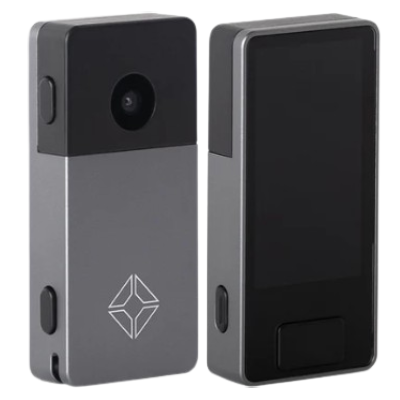
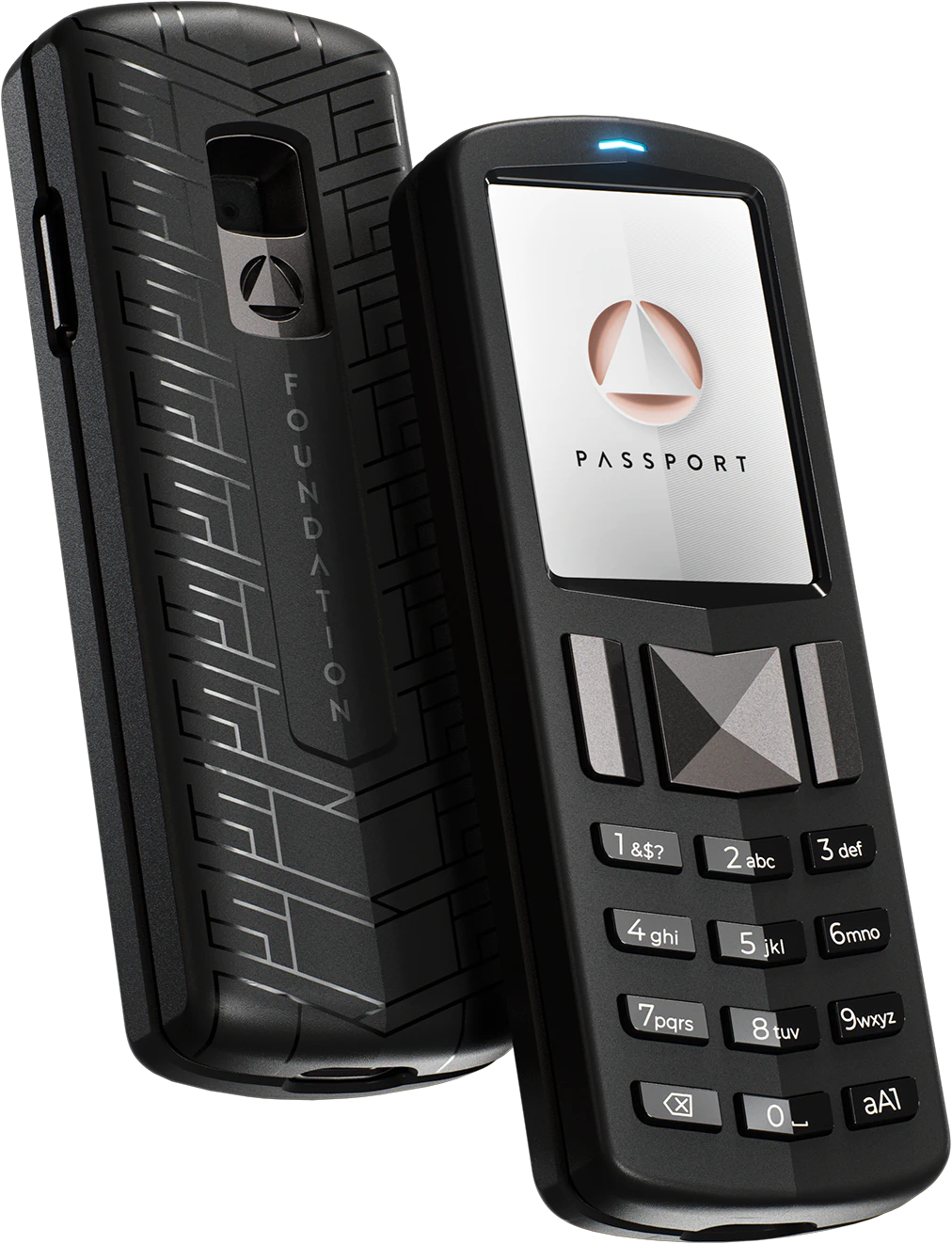
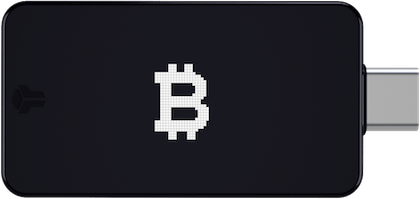
All three are Bitcoin-only and open-source, with full reviews on each.
Last updated August 2, 2026. I previously reviewed and recommended the Coldcard Mk4, Mk5, and Q, and I earned affiliate commissions on them. Those reviews are gone and so are the links. If any fact on this page is wrong, message me and I will correct it.