Trezor Safe 7 Review
Flagship wireless touchscreen hardware wallet
Disclosure: I work at Blockstream, the company that makes the Jade wallets. I joined the company after many years as a satisfied user.
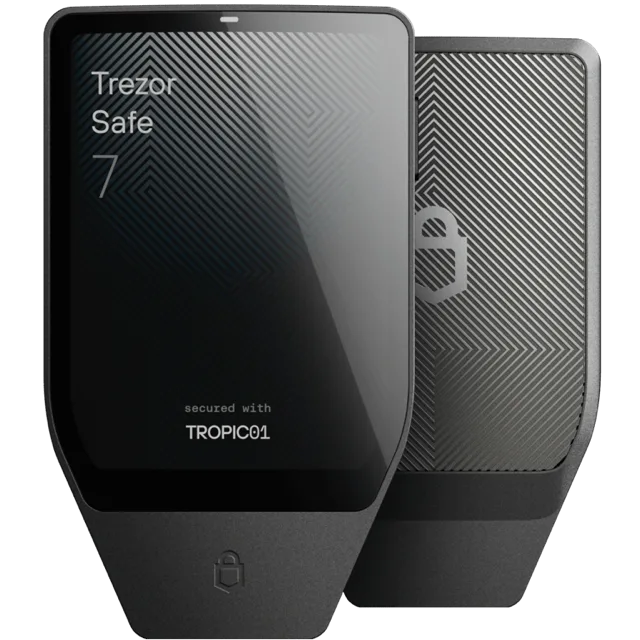
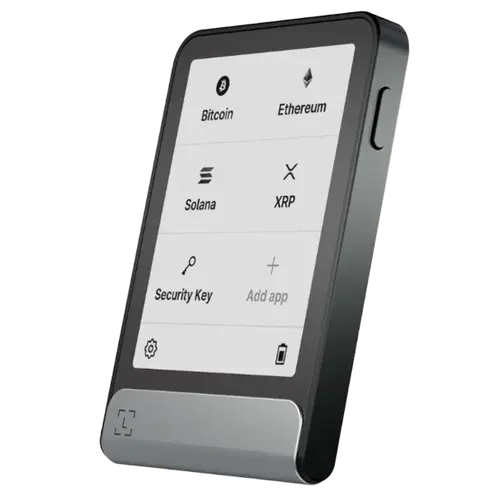
The Trezor Safe 7 is Trezor's flagship, launched in October 2025 at $249. It packs two secure elements, a 2.5" color touchscreen, an aluminum body, Bluetooth, a battery, and Qi2 wireless charging. The headline chip is TROPIC01, a secure element whose design anyone can audit. I like that part a lot. I like less that the standard edition is built to stake, swap, and plug into DeFi apps, and that Trezor added a wireless radio to a device whose whole job is keeping keys away from networks. A Bitcoin-only edition exists at the same price. If you buy one, buy that one.
Multi-Coin Warning
Every altcoin this wallet supports is code that could compromise your bitcoin keys. More tokens means more attack surface. The firmware is bloated with logic for assets that most users don't need.
About SatoshiLabs
Security Architecture
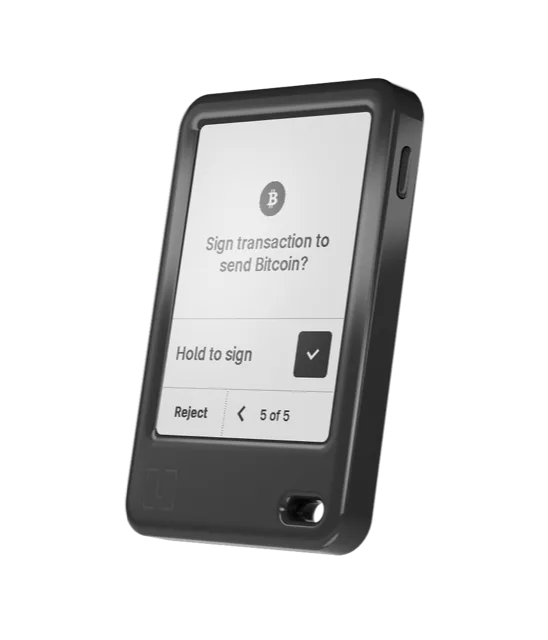
Three independent chips from three vendors: the TROPIC01 auditable secure element, an NDA-free EAL6+ Optiga secure element, and a security-hardened STM32U5 microcontroller. Keys and the wallet backup are not stored on TROPIC01. The bootloader and firmware are verified at every boot with the SLH-DSA-128 post-quantum signature scheme. Transactions are confirmed on the touchscreen, and Bluetooth and USB-C traffic is encrypted with the open-source Trezor Host Protocol.
| Secure Element | Dual: TROPIC01 (auditable, open architecture) plus Optiga EAL6+ (NDA-free) |
| Connection Methods | Bluetooth, USB-C |
| Display | 2.5" color touchscreen (520 x 380 px, 700 nits, Gorilla Glass 3) |
| Passphrase Support | Yes |
| Multisig Support | Yes |
Security Incidents & Controversies
Every company makes mistakes. What matters is how severe they are and what they reveal about priorities. Here's SatoshiLabs's track record:
In pre-production Safe 7 firmware given to a small group right after launch, pressing Cancel did not cancel some non-critical flows, such as staking delegation. Fund-sending flows were not affected, and the fix shipped in the first public firmware.
Trezor disclosed that Ledger Donjon extracted a subset of secrets from the TROPIC01 chip with a laser fault-injection attack, and that Tropic Square found a method to extract one more secret tied to the chip's PIN functions. The attack needs physical possession, desoldering, decapsulation, and lab equipment. Trezor says it does not expose the PIN, funds, or wallet backup, and that it cannot be fixed with a firmware update. Trezor would not commit to whether or when a revised chip will ship in the Safe 7.
A researcher reported that Safe 7 authenticity proofs were checked against a combined key set instead of per secure element, so one valid proof could satisfy all three checks. Trezor now binds each proof to its own element and paid a 1,350 USD bounty.
An attacker got into Brevo, the platform Trezor uses for its newsletter, and sent a phishing email from Trezor's account titled "Critical Security Alert: STM32 Entropy Vulnerability." The link pushed an app that asked for the wallet backup. Brevo confirmed 347,149 newsletter email addresses were exported. Trezor took the domain down within 20 minutes, after about 2,500 people had clicked.
Trust Assessment
Reasons to Trust
- TROPIC01 secure element design is open to audit
- Two secure elements and a microcontroller from three vendors
- Open-source firmware
- Disclosed the TROPIC01 flaw publicly instead of hiding it
- Bitcoin-only edition at the same price
- Long track record since 2013
Concerns
- Standard edition supports altcoins, staking, and DeFi apps
- TROPIC01 hardware flaw cannot be fixed with a firmware update
- Bluetooth adds a wireless attack surface
- No air-gapped signing option
- Expensive at $249
- September 2026 newsletter breach sent phishing from Trezor's own account
What's Good
- Auditable Secure Element: TROPIC01 has an open architecture, so researchers can inspect how it protects keys. That is how the June 2026 flaw was found and disclosed. Closed, NDA-bound secure elements cannot be checked that way.
- Layered Chip Design: Keys and the wallet backup are not stored on TROPIC01. Breaking that one chip does not hand over your PIN or funds, according to Trezor, because the Optiga secure element and the microcontroller are separate layers.
- Big, Readable Screen: The 2.5" touchscreen at 520 x 380 px is 62% bigger than the Safe 5's, per Trezor. Long Bitcoin addresses are easier to check before you sign.
- Bitcoin-Only Edition Available: Trezor sells a Bitcoin-only edition at $249 with Bitcoin-only firmware. That is the only Safe 7 I would consider.
- Post-Quantum Boot Verification: The bootloader and firmware are verified with the SLH-DSA-128 post-quantum signature scheme on every power-on. It protects the firmware update path and does nothing for the signatures on your bitcoin transactions.
Where It Falls Short
- Multi-Coin by Default: The standard edition supports thousands of coins and tokens, staking, swaps, and dApps. Every altcoin integration is code that can break. In August 2026 alone, Trezor's security portal listed fixes for Monero and Stellar signing screens that hid details from the user. None of that belongs near your bitcoin.
- Unfixable Chip Flaw: The TROPIC01 attack targets the hardware, and Trezor says a firmware update cannot fix it. You are paying a premium for a chip that was broken in a lab within eight months of launch.
- Bluetooth and Battery: A radio and a battery add parts that can fail or be attacked. Trezor encrypts the Bluetooth link and lets you turn it off, which tells you the safest setting is off.
- No Air-Gap: There is no QR or microSD signing. Every transaction goes over Bluetooth or USB-C to a connected computer or phone.
- Price: At $249, it costs $100 more than the cheapest Jade Plus and $120 more than a Safe 5. Most of that money goes to wireless charging, Bluetooth, and a metal body.
Best For
- Trezor users who want the auditable TROPIC01 chip
- Buyers who will pick the Bitcoin-only edition and turn Bluetooth off
- People who sign on a phone and accept a wireless link
- NOT for Bitcoiners who want air-gapped signing
Frequently Asked Questions
Wondering if the Trezor Safe 7 is your best option?
Take the quiz and get a personalized recommendation in 60 seconds.
Specs Overview
$249
2.9/10
Multi-Coin
Touchscreen, Bluetooth, Secure Element, Open Source
2.5" color touchscreen (520 x 380 px, 700 nits, Gorilla Glass 3)
Bluetooth, USB-C
The Verdict
From a hardware standpoint, the Trezor Safe 7 is fine. The issue is what runs on that hardware.
It has touchscreen and bluetooth. Some people will like that.
Not Recommended
I don't recommend multi-coin wallets. The attack surface is larger, the codebase is more complex, and most altcoins are scams. At $249, there are Bitcoin-only alternatives that will serve you better.
Bitcoin-only, dummy.
I'm not going to help you buy a multi-coin wallet. Check out my Bitcoin-only recommendations instead.
How Trezor Safe 7 Compares
Was this helpful?
Other reviews worth reading
Closest alternatives to the Trezor Safe 7, by price and security model.